Healthy Living Blog

Why You Should Choose Only A2 Bilona Ghee: Benefits & Science
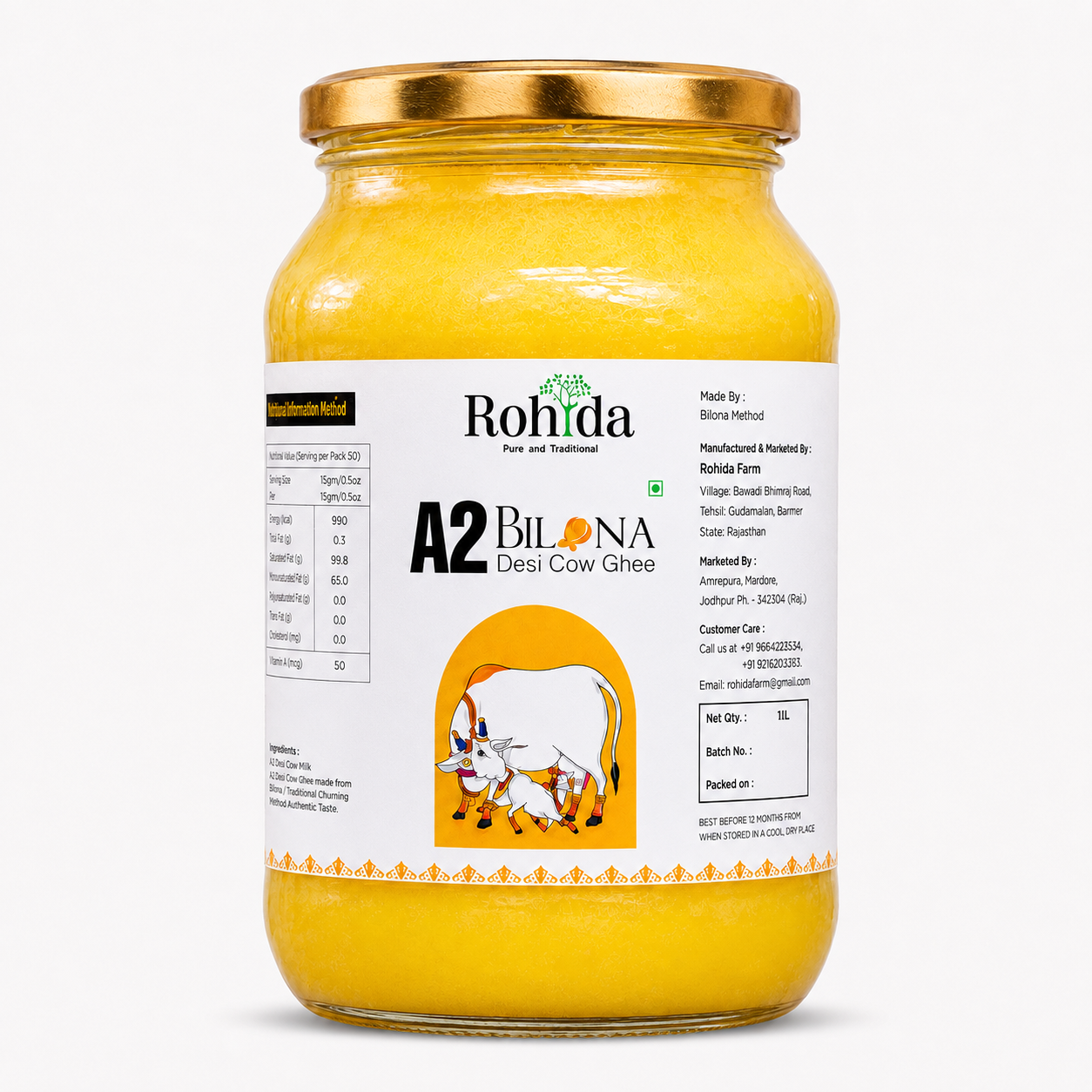
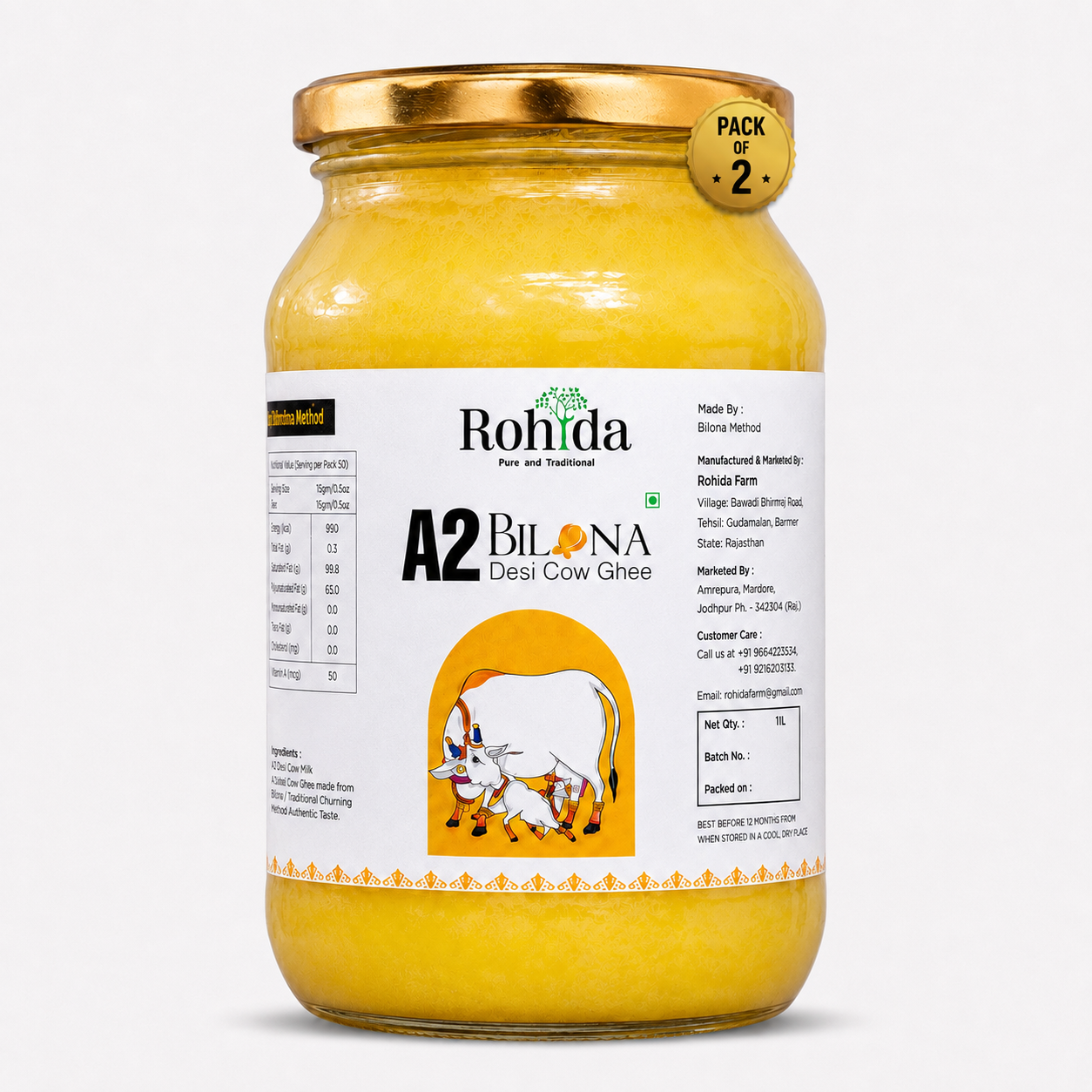
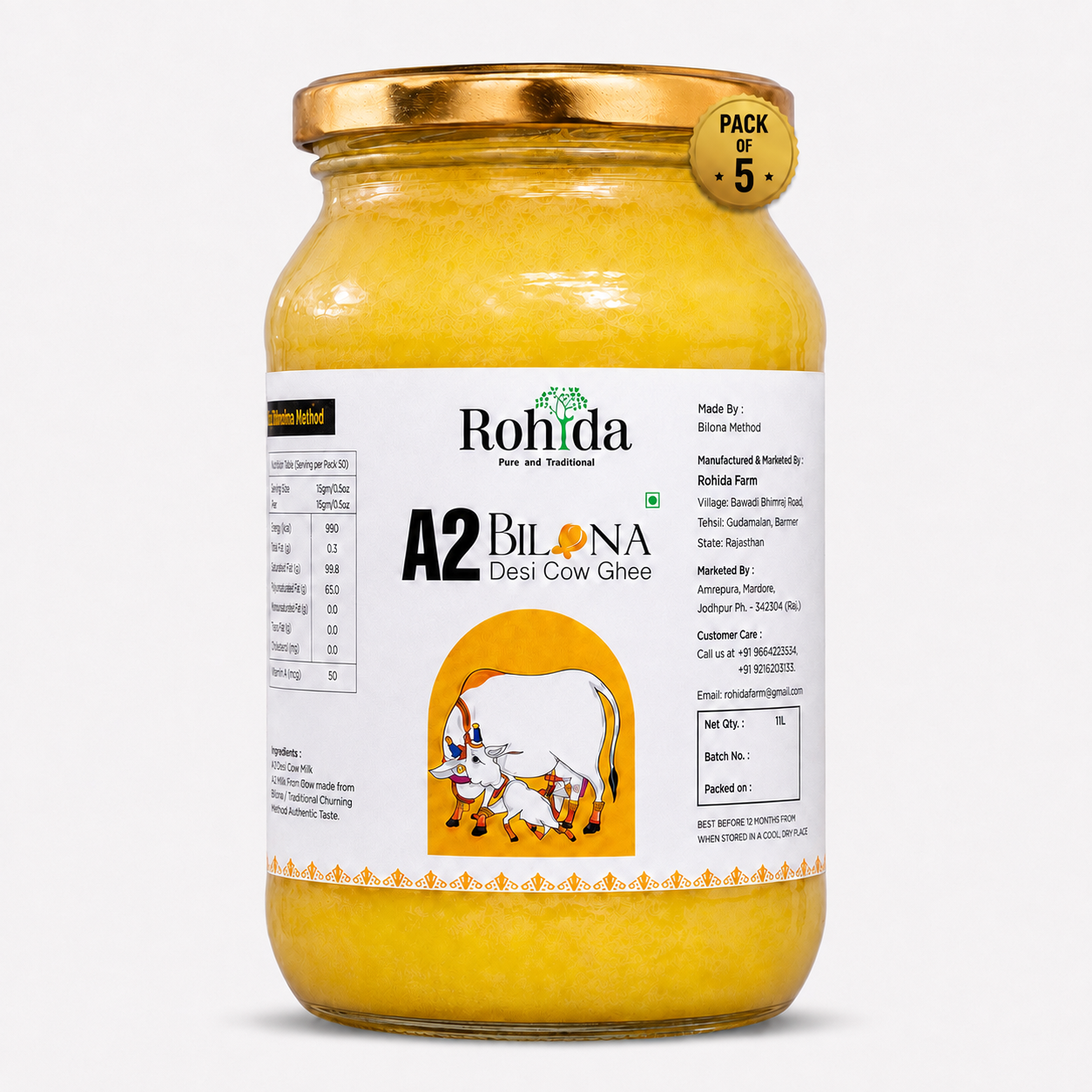
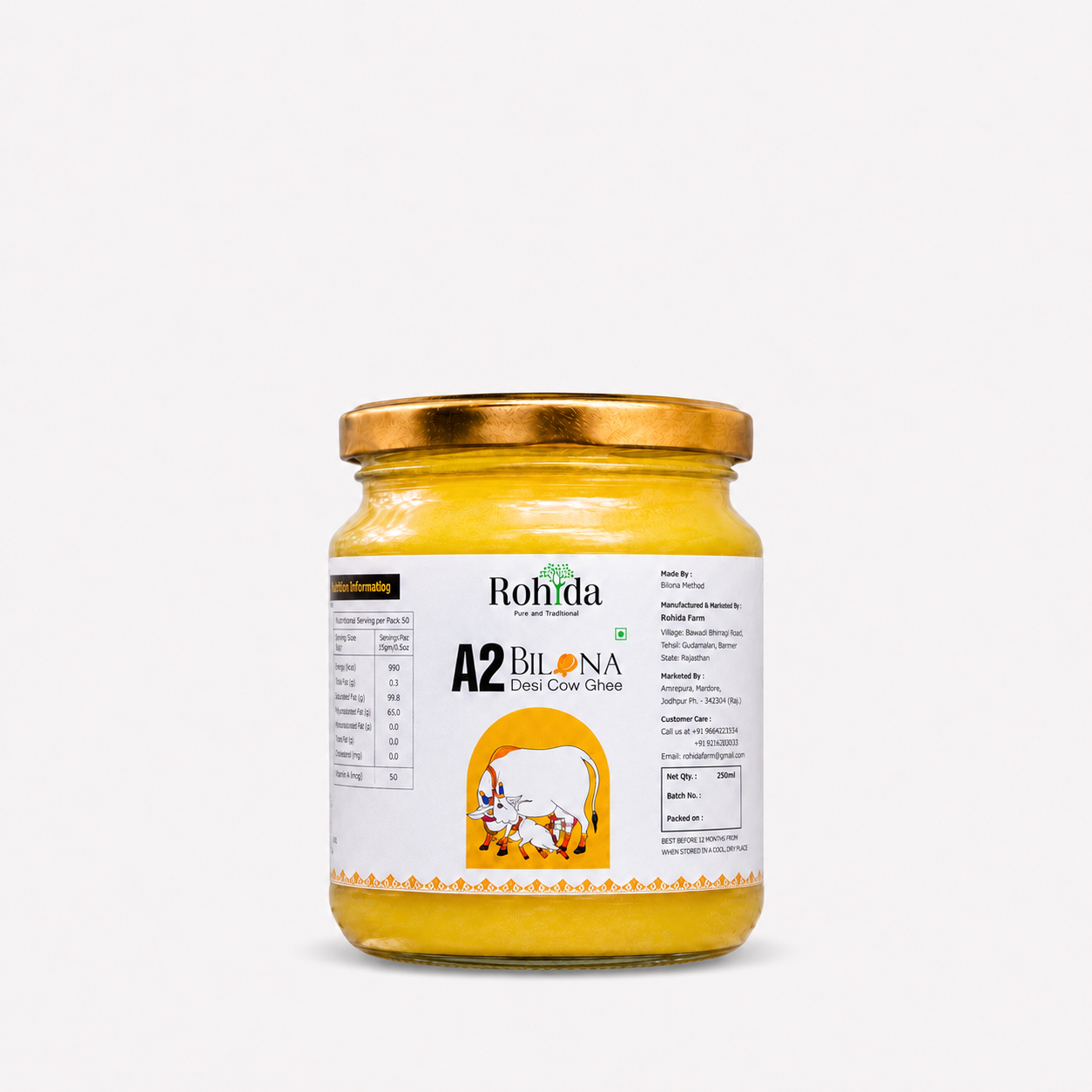
Commercial ghee is frequently produced using highly processed A1 milk, which may contribute to inflammation and bloating. Conversely, authentic A2 Bilona ghee is traditionally crafted from indigenous cow curd using a low-heat process that preserves essential nutrients like butyric acid and Vitamin K2. You can read more about this traditional process on the original blog.
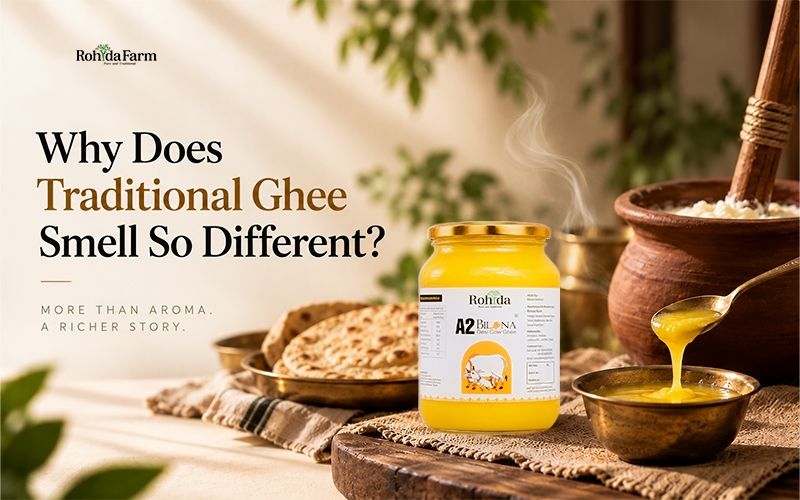
Why Does Traditional Ghee Smell So Different?
Traditional ghee has a distinctive warm, rich aroma that comes from its slow, traditional preparation. At Rohida Farm, indigenous cow milk is transformed through the Bilona process, preserving the familiar taste, aroma and craftsmanship of traditional ghee.
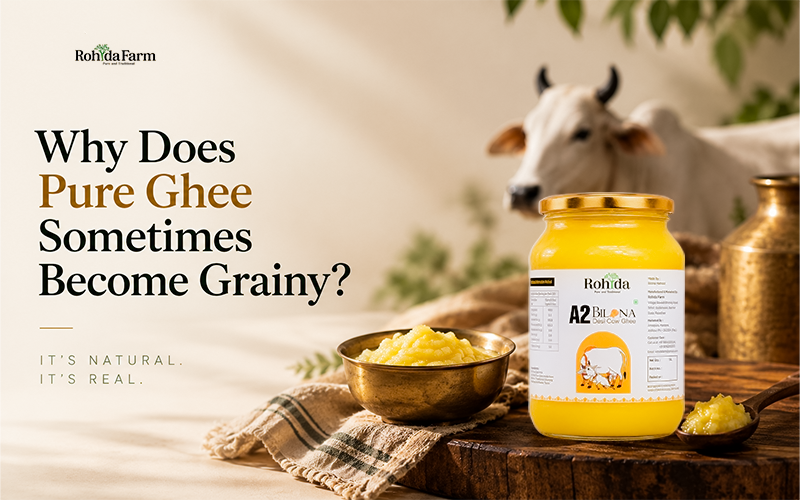
Why Does Pure Ghee Sometimes Become Grainy?
Pure ghee can naturally change texture with the seasons, becoming liquid in warmth and creamy or grainy in cooler temperatures. Rather than judging purity by texture alone, look at its source, traditional preparation, and quality testing.
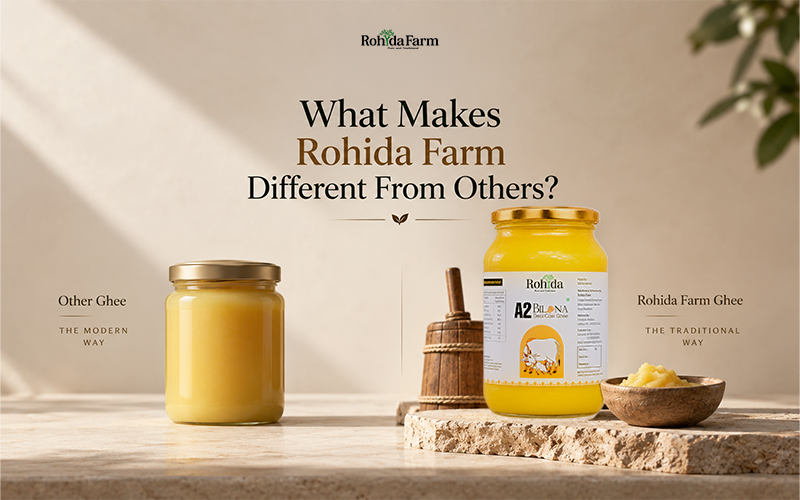
What Makes Rohida Farm Different From Others?
Not every ghee is made the same way. At Rohida Farm, we believe the difference lies in where it comes from and how it is made.
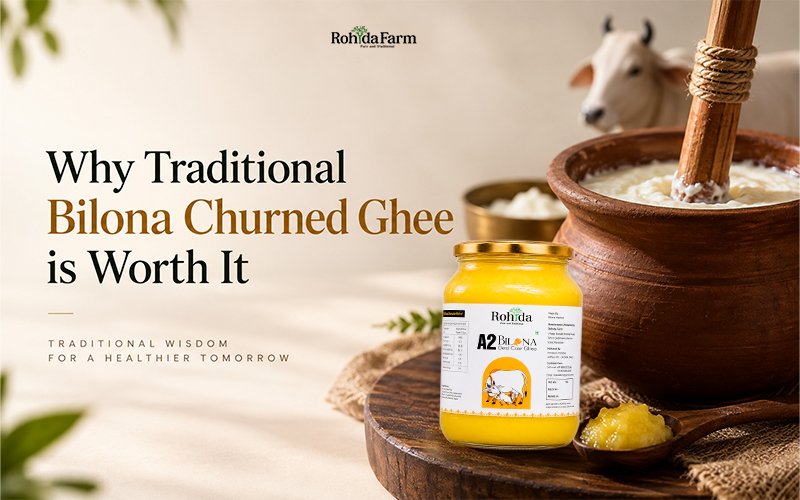
Why Traditional Bilona Churned Ghee is Worth It
Unlike industrial cream-processed ghee, Bilona Cow Ghee involves curd churning, preserving vital butyrate and gut enzymes.